



Aluminum Sulfate
Your Professional Aluminum Sulfate Supplier
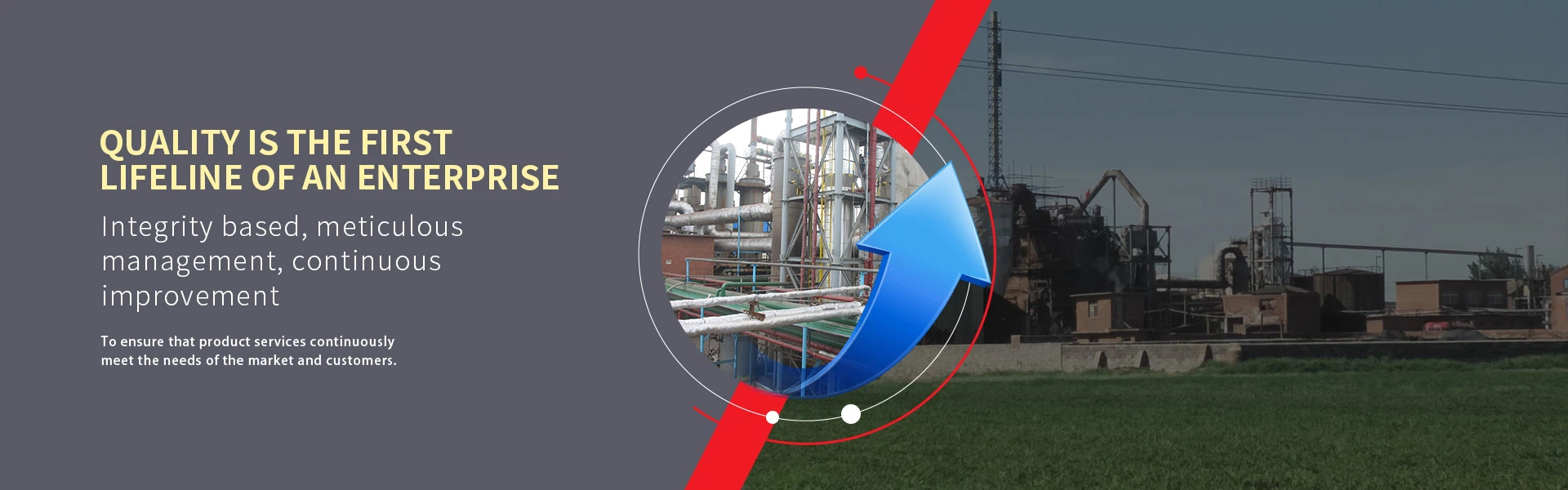
Our goal is to become your true partner in the field of aluminum sulfate China. The company has a number of high-quality R & D technology team and advanced production equipment, the level of production technology continues to improve, the company in line with the development of innovation, to win the market with product quality, to win the trust of customers with a good reputation, the production of a series of products has always been in the forefront of the industry.
Why Choose Us
Our certification
Our product output is always at the forefront of the industry and has passed the IS09001:2015 quality management system certification.
Our capacity
Our current annual production capacity: 50,000 tons of ordinary sulfuric acid, 10,000 tons of refined sulfuric acid, 10,000 tons of AR-grade reagent sulfuric acid, 20,000 tons of 50% reagent sulfuric acid, 10,000 tons of food additive sulfuric acid, 30,000 tons of refined aluminum sulfate, 20,000 tons of iron-free aluminum sulfate, 10,000 tons of low-iron aluminum sulfate, and 20,000 tons of liquid aluminum sulfate.
Product market
Our company's products are sold well in Beijing, Tianjin, the three northeastern provinces, Henan, Shanxi, Shaanxi, Ningxia, Zhejiang, Fujian, Guangdong and other provinces and cities, and are exported to Southeast Asia, the Middle East, North America, Africa and other overseas regions.


Advantages of Aluminum Sulfate
Effective coagulation: Aluminum sulfate has a high coagulation potential, efficiently removing suspended particles and impurities from water and wastewater.
Cost-effective: Aluminium sulphate is economical for coagulation and clarification processes in water and wastewater treatment.
Versatility: Its ability to form liquid or solid solutions increases its versatility and adaptability to different industrial applications.
Environmental sustainability: Aluminum sulfate aids in treating effluents, reducing the environmental impact of industrial processes and contributing to a more sustainable approach.
Improved water quality: It enhances potable water quality, ensuring that it meets safety standards and is suitable for consumption.
Enhanced paper quality: In paper production, aluminum sulfate’s sizing properties improve paper quality, which is essential in printing and publishing.
Colorfast textiles: For the textile industry, aluminum sulfate is critical in producing vibrant and long-lasting fabric colors.
Tanning: Animal hides transform into leather when a combination of aluminum sulfate, sodium chloride, sodium carbonate, and flour are rubbed into the hide repeatedly.
Dyeing: When water is combined with aluminum sulfate, the resulting sludge of aluminum hydroxide acts as a mordant: It causes dyes to absorb into textiles much more rapidly. As a bonus, adding aluminum sulfate during the dyeing process causes textiles to become water insoluble, or colorfast, meaning that the colors will not bleed or seep with excess washings.
Paper manufacturing: Aluminum sulfate removes impurities in water during pulp making. Its ph neutralizes ionic charges, aids in binding materials, and, when combined with rosin soap, changes paper absorbency to create a product more likely to absorb ink.
Safety and filtration: Aluminum sulfate doesn’t just aid in the manufacturing of useful everyday products; it can also help make us safer.
Wastewater treatment: Aluminum sulfate’s largest use is in water treatment plants, where it acts as a flocculant. As impurities clump, they descend to the base of the container and are filtered out.
Fire control: Aluminum sulfate, combined with sodium bicarbonate and a foam stabilizer, produces carbon dioxide in fire extinguishing foams.
Lawn and garden care: The ph of aluminum sulfate acts as a detriment to algal growth; therefore, it is often utilized in freshwater recreation areas. In commercial gardens where soil ph levels are basic, adding aluminum sulfate increases ph to levels more conducive to the growth of the majority of plants.
Food and drug manufacturing: Aluminum sulfate has many uses across industries, but the ones that affect us the most day-to-day are those in the food and medical fields. Here are several examples of ways aluminum sulfate is used in food and drug manufacturing: Tanning: Animal hides transform into leather when a combination of aluminum sulfate, sodium chloride, sodium carbonate, and flour are rubbed into the hide repeatedly.
Dyeing: When water is combined with aluminum sulfate, the resulting sludge of aluminum hydroxide acts as a mordant: It causes dyes to absorb into textiles much more rapidly. As a bonus, adding aluminum sulfate during the dyeing process causes textiles to become water insoluble, or colorfast, meaning that the colors will not bleed or seep with excess washings.
Paper manufacturing: Aluminum sulfate removes impurities in water during pulp making. Its ph neutralizes ionic charges, aids in binding materials, and, when combined with rosin soap, changes paper absorbency to create a product more likely to absorb ink.

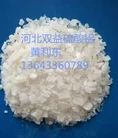
Aluminum sulfate is an inorganic compound, usually in the form of white granules or blocks. Its chemical formula is Al2(SO4)3·xH2O, and its molecular weight is 342.15 (calculated as Al2(SO4)3). This substance is easily soluble in water, insoluble in alcohol, and its aqueous solution is acidic. When heated to 250°C, aluminum sulfate loses its crystal water and begins to decompose at 300°C.
There are several methods for producing aluminum Sulphate, but one of the most common approaches involves the reaction of aluminum hydroxide with sulfuric acid. This process is carried out in a controlled environment to ensure the proper stoichiometric ratio between the reactants.
The chemical reaction can be represented as follows:2 Al(OH)3 + 3 H2SO4 → Al2(SO4)3 + 6 H2O. In this reaction, aluminum hydroxide (Al(OH)3) reacts with sulfuric acid (H2SO4) to yield aluminum Sulphate (Al2(SO4)3) and water (H2O). The resulting aluminum Sulphate can then be further processed and purified for various applications.


Be sure to store and label up the chemicals proficiently on the safety sheet. It is important to store Aluminum Sulfate in its original packaging. Make sure to not store Aluminum Sulfate with any inflammable materials or the gas cylinders. It is important to store the chemical containers with their closed lids when they are not being used. The equipment used for handling or cleaning up the spillage must be in readiness and suitable enough for stored chemicals.
Aluminum Sulfate Packaging
Aluminum sulfate solid products are packed in plastic woven bags, double-wrapped and mixed with an inner bag, tied with a rope.
FAQ
As one of the leading aluminum sulfate manufacturers and suppliers in China, we warmly welcome you to buy high quality aluminum sulfate at low price from our factory. Contact us for quotation and free sample.
Flake aluminum sulfate, 10043-01-3, Low iron aluminum sulfate